
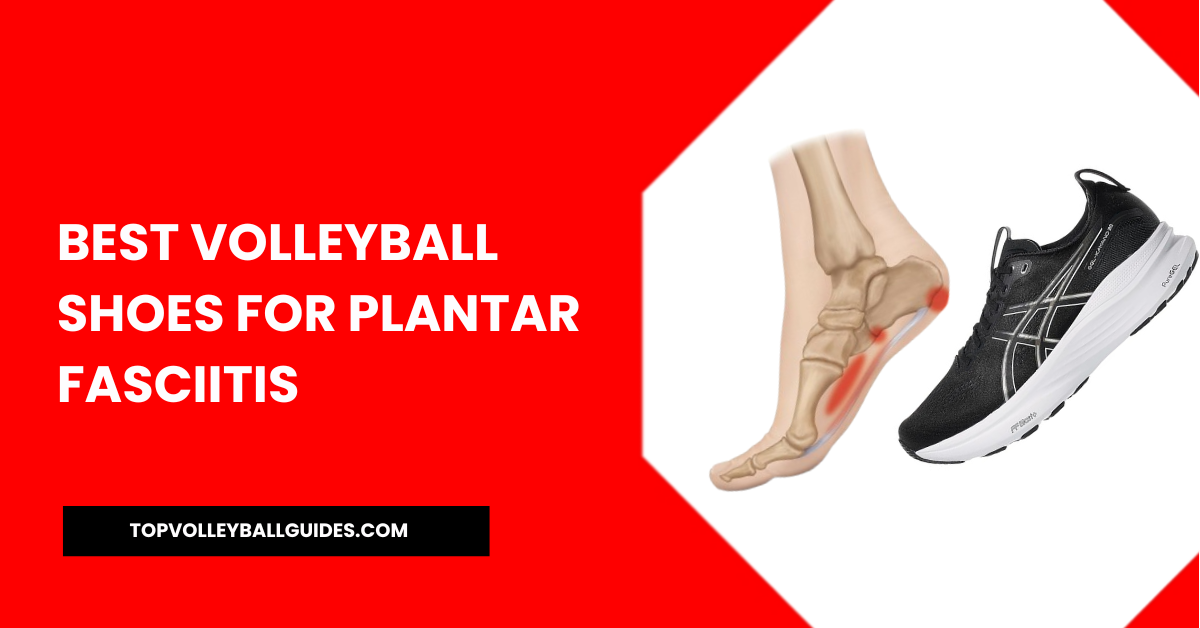
If you’ve ever played volleyball with plantar fasciitis, you know how painful it can get. Every jump, sprint, and landing sends pressure straight to your heels and arches. The wrong shoes only make things worse, but the right pair can make all the difference. With proper cushioning and support, you can stay comfortable, protect your feet, and keep your focus on the game instead of the pain. In this guide, we’ll highlight the best volleyball shoes for plantar fasciitis for both men and women—shoes built to give you stability, shock absorption, and the confidence to play your best.
Disclosure: This post contains affiliate links. If you buy through the links on this page, we may earn a small commission at no extra cost to you.
Quick Picks: Best Volleyball Shoes for Plantar Fasciitis
- Best Overall: ASICS Gel-Kayano — stable, cushioned, best for heel pain control
- Best for Maximum Cushion: ASICS Gel-Nimbus 27 — the softest landing for sore heels
- Best Stability: ASICS GT 2000 14 — best if your feet roll inward or you also have flat feet
- Best Court Shoe: Mizuno Wave Momentum 3 — a real volleyball shoe with strong heel cushioning
- Best for Jumping: ASICS Sky Elite FF — GEL heel cushioning for softer landings
What to Look for in Volleyball Shoes if You Have Plantar Fasciitis
When shopping for shoes, here are some features that can help ease heel and arch pain:
- Thick heel cushioning – absorbs shock with every landing.
- Deep heel cup – cradles and supports the heel.
- Good arch support – or removable insoles so you can add orthotics.
- Stable midsole – keeps your foot from rolling inward.
- Flexible forefoot – allows smoother push-off when you jump or sprint.
1. ASICS Gel-Kayano – Best Overall

The Gel-Kayano is one of the best shoes for handling heel pain. Its GEL cushioning in the heel and forefoot reduces impact on every jump and quick stop, while the stable midsole keeps your foot from collapsing inward. Volleyball players with plantar fasciitis will notice that landings feel softer and movement feels more controlled.
Players with chronic heel pain often say the Gel-Kayano makes a big difference, especially during long matches, and many praise it for reducing morning pain and post-game soreness. The supportive midfoot overlays and reinforced heel counter hold the foot securely, and the Ortholite sockliner adds step-in comfort. It is heavier and pricier than the other picks, but most agree the comfort and support are worth it.
Key Features
- GEL technology cushioning in heel and forefoot
- Supportive midfoot overlays and reinforced heel counter
- Ortholite sockliner for comfort
- Durable rubber outsole with good traction
Best For: Best for players with ongoing heel pain, flat feet or overpronation who need maximum control and stability on court.
Our Verdict: The best overall pick — the most complete pain-control package in this guide.
- Ideal for flat-footed players or those needing control
- Cushioned yet stable ride
- Helps reduce strain from pronation
- Cushioning slightly firmer than Gel-Nimbus
- Slightly heavier feel
2. ASICS Gel-Nimbus 27 – Best for Maximum Cushion

The ASICS Gel-Nimbus 27 is one of the softest, most cushioned shoes you can get — a huge win if heel pain hits you hardest during long practices or after jumping. FF BLAST PLUS foam and PureGEL cushioning absorb impact exceptionally well and give your feet a “floating” feeling, which makes it great for players dealing with plantar fasciitis or sore arches.
Although it is technically a running shoe, many athletes choose it specifically for pain relief during training and lower-impact court time. Players love the cloud-like cushioning and often report reduced heel pain after switching. The trade-off is a bulkier build and less lateral sharpness than a true court shoe, so save it for training days if you play competitively.
Key Features
- FF BLAST PLUS foam + PureGEL cushioning for ultra-soft landings
- Breathable jacquard mesh upper
- Durable rubber outsole for strong grip
- High stack height for extra support and shock protection
Best For: Best for players whose heel pain is severe, and for training, warm-ups and recovery sessions where softness matters more than speed.
Our Verdict: The softest landing in this guide — maximum cushion therapy for sore heels.
- Reliable heel support
- Very comfortable for long sessions or recovery days
- Best-in-class cushioning
- Great shock absorption for jump landing
- Not ideal for super-quick lateral movements
- Higher price point
- Thicker and heavier than normal court shoes
3. ASICS GT 2000 14 – Best Stability for Plantar Fasciitis

The GT 2000 14 is the stability pick: it is made for plantar fasciitis combined with overpronation or flat feet. Its stability system keeps the foot aligned and stops it rolling inward, while FF BLAST cushioning and PureGEL heel technology protect the heel on every landing.
What makes it special is the balance — it gives real support without feeling like a heavy orthopedic shoe, and it is lighter than most stability models. Athletes praise how supportive and pain-relieving it feels under the heel and arch, making it ideal for training, warm-ups and players who want support without bulk.
Key Features
- FF BLAST cushioning + PureGEL heel technology
- Stability system to prevent foot over-rolling
- Breathable upper with secure mid-foot hold
- Lightweight feel for a stability shoe
Best For: Best for flat-footed players and anyone whose feet roll inward, who need alignment and heel protection in one shoe.
Our Verdict: The stability specialist — the pick that covers plantar fasciitis and flat feet together.
- Ideal for flat-footed players or those needing control
- Cushioned yet stable ride
- Helps reduce strain from pronation
- Strong arch + heel support
- Cushioning slightly firmer than Gel-Nimbus
- Slightly heavier feel
- Not as fast or minimal as court-specific shoes
4. Mizuno Wave Momentum 3 – Best Court Shoe for Plantar Fasciitis

The Wave Momentum 3 is the pick for players who want a real volleyball shoe without giving up heel protection. The MIZUNO ENERZY foam absorbs landing impact under the heel, while the Wave Plate spreads the shock and keeps the foot stable in side-to-side movement — exactly what running shoes cannot do.
For plantar fasciitis players who play competitively, this is the best balance of cushioning and court performance. Players praise it for long-session comfort and a locked-in, bootie fit. It is firmer than the Gel-Nimbus 27, so the pain relief comes more from stability and shock dispersion than from pure softness.
Key Features
- Mizuno Enerzy foam midsole for soft, high-energy cushioning
- Wave Plate for stability and shock dispersion
- Bootie construction for a snug, supportive fit
- Durable rubber outsole built for indoor courts
Best For: Best for competitive players with mild to moderate heel pain who refuse to give up true court-shoe movement.
Our Verdict: The match-day pick — real volleyball performance with real heel protection.
Pros
- True volleyball shoe with strong cushioning
- Excellent stability for lateral movement
- Durable for long seasons
Cons
- Firmer feel than maximum-cushion running shoes
- Premium price
5. ASICS Sky Elite FF – Best for Jumping With Heel Pain

The Sky Elite FF is ASICS’ jumping shoe, and its heel GEL is exactly what plantar fasciitis players need at landing. FlyteFoam cushioning returns energy on every approach while softening the impact that triggers heel pain, and unlike the running shoes above, it is built purely for volleyball movement.
Hitters and blockers love the Sky Elite for its bounce and light feel, and the curved heel design keeps transitions smooth from landing to the next play. It has less arch structure than the Gel-Kayano, so players who need maximum stability may prefer the Momentum 3 or Kayano instead.
Key Features
- GEL cushioning in the heel for landing impact
- FlyteFoam midsole for light, responsive bounce
- Curved heel design for smooth transitions
- Supportive upper for jumping and quick take-offs
Best For: Best for hitters and blockers with heel pain who jump constantly and need cushioned landings without losing bounce.
Our Verdict: The jumper’s pain-relief pick — explosive, light, and kind to your heels.
Pros
- Built for jumping with cushioned landings
- Lightweight and responsive
- True court shoe grip and support
Cons
- Less stability than the Kayano for over-pronation
- Premium price
Why Volleyball Is Hard on Plantar Fasciitis
Volleyball is one of the toughest sports for plantar fasciitis. Every approach jump, block, and landing loads your heel and arch with several times your body weight, and hard indoor courts give almost no shock absorption back. That is why players with plantar fasciitis often feel sharp heel pain on the first steps in the morning and again after long matches. The right shoes cannot cure the condition, but thick heel cushioning, a deep heel cup, and strong arch support can take a lot of that impact away.
Can You Play Volleyball With Plantar Fasciitis?
Yes — most players can keep playing if they manage the load and wear supportive shoes. These habits help:
- Warm up properly before every session — poor warm-ups are one of the common volleyball mistakes that lead to injuries.
- Stretch your calves and roll a ball under your foot before and after playing.
- Ice your heel for 10-15 minutes after matches.
- Add cushioned insoles or orthotics if your shoes allow removable insoles.
- Avoid playing on back-to-back days while pain is at its worst.
If the pain is sharp, lasts for weeks, or keeps getting worse, get it checked by a doctor or physiotherapist instead of playing through it.
Running Shoes vs Volleyball Shoes for Plantar Fasciitis
You may notice the first three picks in this guide are ASICS support shoes rather than pure volleyball models, while picks 4 and 5 are true court shoes. Many players with plantar fasciitis choose them deliberately: their maximum cushioning and stability protect painful heels better than most lightweight court shoes. The trade-off is lateral movement — running shoes are not built for side-to-side play, so competitive players often wear them for training and recovery, and choose a cushioned court shoe on match days. For court-specific options, see our main guide to the best volleyball shoes.
Plantar Fasciitis or Flat Feet — Which Guide Do You Need?
The two problems often come together, but they are not the same. Plantar fasciitis is about heel and arch pain from an irritated fascia; flat feet are about the shape of your arch and how your foot rolls. If your main problem is flat arches without heel pain, read our guide to the best volleyball shoes for flat feet instead. If you have both, the ASICS GT 2000 14 above is the pick that covers both.
FAQs
Q: What are the best volleyball shoes for plantar fasciitis?
A: The ASICS Gel-Kayano is the best overall pick thanks to its stable, cushioned ride. If maximum softness matters most, choose the ASICS Gel-Nimbus 27; for stability and inward-rolling feet, choose the ASICS GT 2000 14. For a true volleyball court shoe, choose the Mizuno Wave Momentum 3 (pick 4).
Q: What are the best volleyball shoes?
A: For players without foot pain, the Mizuno Wave Momentum 3 and ASICS Sky Elite series lead our main best volleyball shoes guide. If you have plantar fasciitis, the cushioned picks in this guide will protect your heels better.
Q: What type of heel is best for plantar fasciitis?
A: Look for a thick, well-cushioned heel with a deep heel cup that cradles the heel bone. GEL or foam heel cushioning absorbs landing impact, which is what triggers heel pain on jumps.
Q: Can I play volleyball with plantar fasciitis?
A: Usually yes, with supportive cushioned shoes, proper warm-ups, stretching, and rest between sessions. If pain is severe or does not improve after a few weeks, see a doctor or physiotherapist.
Q: Are running shoes good for volleyball if I have plantar fasciitis?
A: They can help a lot with heel pain during training because of their cushioning, but they are weaker for side-to-side movement. Many players train in cushioned support shoes and play matches in a cushioned volleyball shoe.
Q: Do insoles help with plantar fasciitis in volleyball?
A: Yes. Cushioned insoles or orthotics add arch support and heel padding inside any shoe. Choose shoes with removable insoles, like the picks above, so you can swap them in.
Q: Which shoes are best if I have both flat feet and plantar fasciitis?
A: The ASICS GT 2000 14 — it combines stability for flat, inward-rolling feet with strong heel cushioning for plantar fasciitis pain.
Playing volleyball with plantar fasciitis is painful, but the right shoes make a real difference. Choose thick heel cushioning, firm arch support, and a stable fit, manage your training load, and your heels will thank you after every match. Start with the Gel-Kayano for all-round support, the Gel-Nimbus 27 for maximum cushion, or the GT 2000 14 if you also have flat feet.