
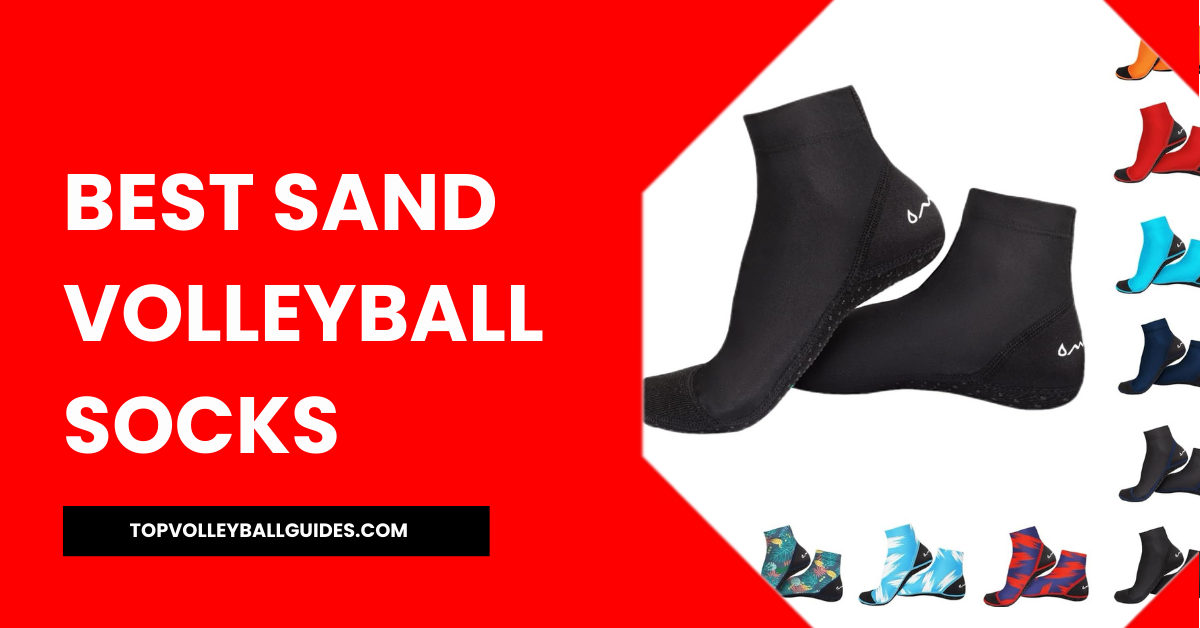
Whether you’re a beach volleyball pro or just love playing in the sand, having the right sand socks can make a big difference. Sand socks protect your feet from hot sand, cold surfaces, and sharp objects while still giving you the grip and flexibility you need to play your best.
Below is a list of the best sand socks for volleyball in 2026, along with their features, performance, reviews, pros, and cons, all explained in easy words so everyone can understand.
Affiliate Disclosure: This post contains affiliate links. If you buy through these links, we may earn a small commission at no extra cost to you. This helps us keep creating free volleyball guides and honest reviews.
What Are Sand Socks?
Sand socks are snug, sock-like footwear made for beach sports. A stretchy lycra or neoprene upper keeps the sand out, while a thin, grippy sole protects the bottom of your foot. Think of them as the middle ground between playing barefoot and wearing shoes: your feet move naturally, but the sand stops being the opponent.
Players wear them for four reasons:
- Hot sand — midday sand can genuinely burn bare feet; a sole layer ends that.
- Sharp stuff — shells, pebbles and even broken glass hide in beach sand, and the sole is your shield.
- Grip — textured soles grip better than bare skin for plants, cuts and jumps.
- Sun and blisters — coverage prevents sunburned feet and reduces friction blisters during long sessions.
Quick Comparison: The 10 Best Sand Socks for Beach Volleyball
| Product | Best For | Key Feature |
|---|---|---|
| BPS ‘Second Skin’ Ultra Stretch Socks | Best Lightweight | Ultra-stretch fabric, anti-slip sole |
| Seavenger SeaSnugs Tall Beach Sock | Best Ankle Protection | Tall fit with UV protection |
| Vincere Sprites Sand Socks | Best for Beach Volleyball | Thin, flexible, volleyball-specific |
| Nordic Essentials Sand Socks | Best Grip | Anti-slip sole, soft upper |
| Tilos Sport Skin Socks | Best for Cold & Rocky Beaches | 2.5mm neoprene, reinforced toe and heel |
| Shocsox Beach Socks | Best High-Top Grip | Stretchy fit, grip sole |
| BPS Neoprene Socks | Best for Water Sports | Neoprene warmth, adjustable strap |
| XUKER Neoprene Water Socks | Best Thick Protection | 3mm neoprene, anti-slip sole |
| Blue Lightning Low Top Sprites | Best Low-Top | Thin, breathable, low cut |
| Classic High Top Pink Sand Socks | Best Full Coverage | High-top ankle coverage, stretchy upper |
1. BPS ‘Second Skin’ Ultra Stretch Socks — Best Lightweight

The BPS ‘Second Skin’ does exactly what the name promises: an ultra-stretchy, feather-light fabric with an anti-slip sole that feels like playing barefoot — minus the burns. A mesh storage bag comes in the box, and the fit is snug without squeezing.
On hot days this breathability is the whole game: quick movement, a natural foot feel, and no heavy neoprene sweat. The trade-off is a thin sole that wears faster and offers little protection on rocky beaches. For clean sand and fast games, it is the lightest comfortable option here.
Key Features
- Ultra-stretchy and light fabric
- Comes with a mesh bag
- Anti-slip soles
- BPS guarantee

Best For: Best for players who want a barefoot feel with heat and slip protection on clean sand.
Our Verdict: The lightweight pick — second-skin comfort for fast beach games.
- Comes with storage bag
- Comfortable and stretchy
- Affordable price
- Not for rocky surfaces
- Thin sole may wear quickly
2. Seavenger SeaSnugs Tall Beach Sock — Best Ankle Protection

The SeaSnugs are the tall option: full ankle coverage with UV protection and quick-drying material, built for players who spend whole days on the beach and otherwise come home with sunburned, scratched ankles.
That coverage is the point — protection from sun, hot sand and rough surfaces during long sessions. The costs: slightly bulky, and warmer than low-tops in peak heat. For tournament days and sensitive skin, the trade is easily worth it.
Key Features
- Tall socks for better ankle protection
- UV protection
- Quick-drying material

Best For: Best for long beach days, tournaments and players who want full ankle and sun protection.
Our Verdict: The coverage pick — tall, protective and made for long days.
- Tall and protective
- Good for hot sand
- Comfortable fit
- Slightly bulky
- May be too warm in high heat
3. Vincere Sprites Sand Socks — Best for Beach Volleyball

Vincere is the brand that built this category, and the Sprites are its volleyball-specific model: thin, flexible, protective against hot sand and sun, and available in more colors and designs than any rival.

The fit is the difference players notice — light and free-moving, with a sporty grip that keeps cuts and plants confident during matches. Like most thin socks, the sole wears with heavy use, and rocky beaches are not its home. For pure beach volleyball, this is the specialist benchmark.
Key Features
- Thin and flexible
- Protects from hot sand and sun
- Comes in many colors and designs
Best For: Best for serious beach volleyball players who want the category’s specialist sock.
Our Verdict: The specialist pick — the original sand sock, tuned for volleyball.
- Lightweight and breathable
- Stylish design options
- Good grip on sand
- Not suitable for rocky beaches
- Sole may wear with heavy use
4. Nordic Essentials Sand Socks — Best Grip

Nordic Essentials focuses on traction: an anti-slip sole under a soft, snug upper, made for beach sports and players who move constantly — cutting, shuffling and planting on soft or slippery sand.
Grip is genuinely its strength, and it doubles happily for other beach activities. The limits are a narrower size range and a thinner build than the neoprene options. If slipping is your main problem, start here.
Key Features
- Made for beach sports
- Anti-slip sole
- Soft upper layer
Best For: Best for players whose game depends on grip — lots of movement, cuts and plants.
Our Verdict: The grip pick — anti-slip confidence for active players.
- Good for multiple beach activities
- Great grip
- Easy to wear
- Limited size range
- Not very thick
5. Tilos Sport Skin Socks — Best for Cold & Rocky Beaches

The Tilos Sport Skin is the heavy armor of this list: 2.5mm neoprene with a reinforced toe and heel, built for rocky shores, cold morning sand and water-and-sand crossover use.
That thickness means real protection where thin socks fail — at the cost of breathability and a heavier feel in peak summer heat. Early-morning players and rocky-beach regulars will not care; this is the durable, rough-conditions choice.
Key Features
- 2.5mm neoprene for extra protection
- Reinforced toe and heel
- Great for water and sand use
Best For: Best for rocky beaches, cold conditions and players who want maximum protection.
Our Verdict: The armor pick — thick neoprene for rough, cold beaches.
- Durable
- Great in cold or rough sand
- Strong build
- Less breathable
- May feel heavy
6. Shocsox Beach Socks — Best High-Top Grip

Shocsox are built for competitive beach players: a high-top style with a stretchy fit and a grip sole, designed specifically for beach volleyball’s jumps, dives and quick lateral moves — plus real ankle support that most sand socks skip.
That support-and-grip combination is why competitive players pay the premium. The costs are price and breathability — they run warmer than low-tops. For match play where ankles and traction matter, they are the performance pick.
Key Features
- High-top style
- Stretchy fit with grip sole
- Made for beach volleyball
Best For: Best for competitive players who want ankle support and maximum grip.
Our Verdict: The performance pick — high-top support with a serious grip sole.
- Excellent ankle support
- Good grip
- Made for performance
- Pricey
- Not as breathable
7. BPS Neoprene Socks — Best for Water Sports

The BPS Neoprene takes the brand’s other route: neoprene warmth and comfort, an adjustable strap for a secure fit, and a design that works across all water sports — paddleboarding and kayaking included.
On cold or wet sand it insulates and stays put without slipping, at an affordable price. It is bulkier than lycra sand socks and not made for very hot weather. As a beach-and-water all-rounder, it earns its spot.
Key Features
- Neoprene material for warmth and comfort
- Adjustable strap
- Great for all water sports
Best For: Best for cold or wet conditions and players who also do other water sports.
Our Verdict: The crossover pick — warmth, security and water-sport range.
- Warm and secure
- Versatile use
- Affordable
- Bulkier than regular sand socks
- Not ideal for very hot weather
8. XUKER Neoprene Water Socks — Best Thick Protection

The XUKER is the heavy-duty neoprene option: 3mm neoprene, a durable sole and anti-slip grip, built for rocky sand, mixed terrain and long beach days where thin socks give up.
Longevity is the story — strong, warm and hard-wearing. In peak summer it can get hot, and the thick build is less flexible than lycra models. For rough beaches and durability-first buyers, it is the toughest sock here.
Key Features
- Durable sole
- Anti-slip grip
- 3mm neoprene for better protection
Best For: Best for rocky or mixed terrain and players who prioritize durability.
Our Verdict: The heavy-duty pick — 3mm armor with a grip sole.
- Long-lasting
- Good grip
- Strong and warm
- May get hot in summer
- Thick and less flexible
9. Blue Lightning Low Top Sprites — Best Low-Top

The Blue Lightning Sprites are the low-top, look-at-me option from the Vincere Sprites family: a low cut, bold lightning graphics, thin and breathable — made for sunny-day practice and freedom of movement.
Airflow is the win on hot days, and the design stands out. The compromises are no ankle protection and faster wear under heavy use. For shorter matches and hot-weather practice, they are the fun, airy choice.
Key Features
- Low cut
- Blue lightning graphics
- Thin and breathable
Best For: Best for hot days, practice games and players who prefer a low-top feel.
Our Verdict: The sunny-day pick — light, airy and impossible to miss.
- Good for hot days
- Fun design
- Light and airy
- Wears quicker with heavy use
- No ankle protection
10. Classic High Top Pink Sand Socks — Best Full Coverage

The Classic High Top in pink is the style-forward full-coverage option: a bright design, complete ankle coverage and a soft, stretchy upper that stays comfortable through long matches.
Protection and comfort are genuine — this is not just a color variant. It can get warm, and the color may fade with long sun exposure. For players who want coverage with personality, it delivers both.
Key Features
- Bright pink design
- Full ankle coverage
- Soft and stretchy upper
Best For: Best for players who want full ankle coverage and a bold look.
Our Verdict: The style-and-coverage pick — bright, protective and comfortable.
- Comfortable
- Good protection
- Fun look
- May fade with long sun exposure
- Gets warm
Sand Socks Size Chart
Sand socks should fit snug — loose socks fill with sand and slip mid-rally. Use your normal shoe size as the starting point: if you are between sizes, size down for thin lycra models and up for thick neoprene. The chart below is a general guide; always check the brand’s own chart before ordering, because ranges vary slightly by brand.
| US Men’s | US Women’s | Sand Sock Size |
|---|---|---|
| 4-5 | 5-6 | XS |
| 5.5-6.5 | 6.5-7.5 | S |
| 7-8.5 | 8-9.5 | M |
| 9-10.5 | 10-11.5 | L |
| 11-13 | 12-14 | XL |
How to Choose the Best Sand Socks for Beach Volleyball
Six things separate a great pair from a spare pair:
1. Fit and Comfort
Snug is everything. A proper sand sock hugs the foot with no wrinkles; loose fabric traps sand and twists during play. Stretchy lycra models forgive fit the most, so beginners should start there.
2. Material — Lycra vs Neoprene
Thin lycra and spandex socks (Vincere Sprites, BPS Second Skin) are light, breathable and best for hot, clean sand. Neoprene at 2.5-3mm (Tilos, XUKER, BPS Neoprene) adds warmth and armor for cold or rocky beaches — at the cost of heat in summer.
3. Ankle Coverage
Low-tops feel the freest and coolest. High-tops add ankle support, keep more sand out, and protect against the sun — worth it for long days and competitive play, like the Shocsox and SeaSnugs here.
4. Grip and Traction
The sole decides your footing. Textured, anti-slip soles grip for plants and cuts; smooth, thin soles feel natural but slip more on wet or packed sand.
5. Breathability
Hot-climate players should prioritize thin, quick-drying uppers. Cold-climate players should do the opposite. Match the sock to your beach’s temperature, not just its sand.
6. Durability and Care
Soles wear first — heavy users should expect a season or two from thin models. Rinse after every use, air-dry out of direct sun, and never wash neoprene hot; simple care doubles a pair’s life.
Sand Socks for Beach Soccer and Other Beach Sports
Everything in this guide applies beyond volleyball: beach soccer players wear the same socks for the same reasons — hot sand, grip for cuts and shots, and protection on rough beaches. The picks here cross over directly. Competitive beach soccer players usually prefer high-top grip models like the Shocsox, while youth players do best in snug lycra pairs like the Vincere Sprites or BPS Second Skin, in smaller sizes. The same pairs also serve beach workouts, spikeball and general sand training days.
Frequently Asked Questions About Sand Socks
What are sand socks used for?
Sand socks protect your feet from hot sand, sharp shells and glass, sunburn and blisters, while keeping the natural movement and grip beach sports demand. They are worn for beach volleyball, beach soccer and other sand sports.
Do sand socks really protect against hot sand?
Yes — the sole layer insulates your foot from the surface. Neoprene protects the most; thin lycra is enough for most beaches. On extreme midday heat, choose a neoprene pair from this list.
Can you wear sand socks in the water?
Yes. Most sand socks are water-friendly and quick-drying, and the neoprene models double as water socks. Just rinse them with fresh water after salt-water use.
How should sand socks fit?
Snug, like a second skin — no wrinkles, no slipping heel. If you are between sizes, go down for lycra and up for thick neoprene. The size chart above gives the general ranges.
Are sand socks allowed in beach volleyball tournaments?
In most amateur tournaments, yes — sand socks are standard beach volleyball gear. Official rules also allow them in cold conditions with the referee’s agreement. For elite-level events, check your tournament’s uniform rules first.
How long do sand socks last?
Thin lycra pairs typically last about a season of regular play; neoprene pairs last longer. Sole wear is the usual end of life. Rinsing after use and drying in the shade extends any pair’s life.
What is the difference between sand socks and water socks?
Sand socks prioritize a thin, grippy sole and a sand-proof snug upper for sport. Water socks usually have thicker soles for walking on rocks and boat decks. The neoprene models in this guide do both jobs.
Final Verdict: Which Sand Socks Should You Buy?
For pure beach volleyball, the Vincere Sprites remain the specialist benchmark. The BPS ‘Second Skin’ is the lightweight value pick, Shocsox serve competitive players who want support and grip, and the Tilos and XUKER protect on cold, rocky beaches. Whichever pair you choose, complete the beach setup: our best outdoor volleyball nets guide covers the court itself, our best grass volleyball shoes guide covers grass days, and a good pair from our best volleyball sunglasses guide keeps the sun out of your eyes at the net.
1 thought on “10 Best Sand Socks for Beach Volleyball in 2026”