

The best volleyball arm sleeves should stay securely in place, feel comfortable through long matches, and provide the right level of protection for the way you play. Some players prefer padded sleeves for extra coverage during dives and floor contact, while others choose lightweight compression sleeves for a close, flexible fit.
With so many options available, however, not every sleeve is equally well suited to volleyball. A sleeve that works for an outside hitter may not be the best choice for a libero who spends more time diving and playing defense. Fit and sizing are also especially important when choosing volleyball arm sleeves for girls and youth players.
To make the choice easier, we compared nine popular arm sleeves for volleyball players, including padded and non-padded options from brands such as Mizuno, Under Armour, McDavid, and Nike.
Below, you can compare our picks and then read the detailed reviews to find the right volleyball sleeves for your position, playing style, and comfort preferences.
Quick Comparison of the Best Volleyball Arm Sleeves
| Product | Best For | Padding | Key Feature |
|---|---|---|---|
| Mizuno MZO Padded Sleeves | Best Overall | Yes | Volleyball-specific padded design |
| Under Armour Volleyball Hex | Best Padded | Yes | Hex elbow padding |
| McDavid 6500 Hex | Best for Elbow Protection | Yes | 9mm Hex padding |
| Mizuno Arm Sleeves | Best Lightweight | No | Flexible compression fit |
| Under Armour Performance | Best for Outdoor Play | No | UPF 30+ protection |
| Nike Pro Dri-FIT 4.0 | Best for Sweat Management | No | Dri-FIT material |
| Cooling Arm Sleeves | Best for Hot Weather | No | Cooling/UV-focused design |
| Nike Pro Youth Elite 2.0 | Best for Youth | No | Youth-specific fit |
| FitsT4 Youth | Best for Beginners | No | Anti-slip youth design |
9 Best Arm Sleeves for Volleyball Players
1. Mizuno MZO Padded Sleeves — Best Overall Volleyball Arm Sleeves

If you want a balance of padding, comfort, and freedom of movement, the Mizuno MZO Padded Sleeves are our best overall pick. They are designed with volleyball in mind and feature padding around the elbow area, making them particularly useful for liberos and defensive players who frequently dive or make contact with the floor.
The compression-style fit helps the sleeves stay close to your arms without adding unnecessary bulk. The lightweight, moisture-wicking material also makes them more practical for practices, tournaments, and longer matches.
Key Features
- Padded elbow area for added protection
- Compression-style fit
- Lightweight construction
- Moisture-wicking material
- Designed for volleyball players
Best For
These padded volleyball arm sleeves are a strong choice for liberos, defensive specialists, and players who regularly dive for the ball. If floor contact is one of your main concerns, the extra elbow coverage gives the MZO an advantage over basic non-padded sleeves.
Our Verdict: The Mizuno MZO is the most well-rounded option on this list for players who want actual padding without moving to a bulky elbow pad. It is especially worth considering for liberos and other defensive players.
- Good combination of padding and flexibility
- Secure compression-style fit
- Useful for frequent diving and defensive play
- Lightweight material
- Volleyball-focused design
- Limited color choices
- Can feel warmer than thin, non-padded sleeves
- Padding may initially feel slightly stiff around the elbow
2. Under Armour Volleyball Hex Padded Arm Sleeve — Best Padded Option
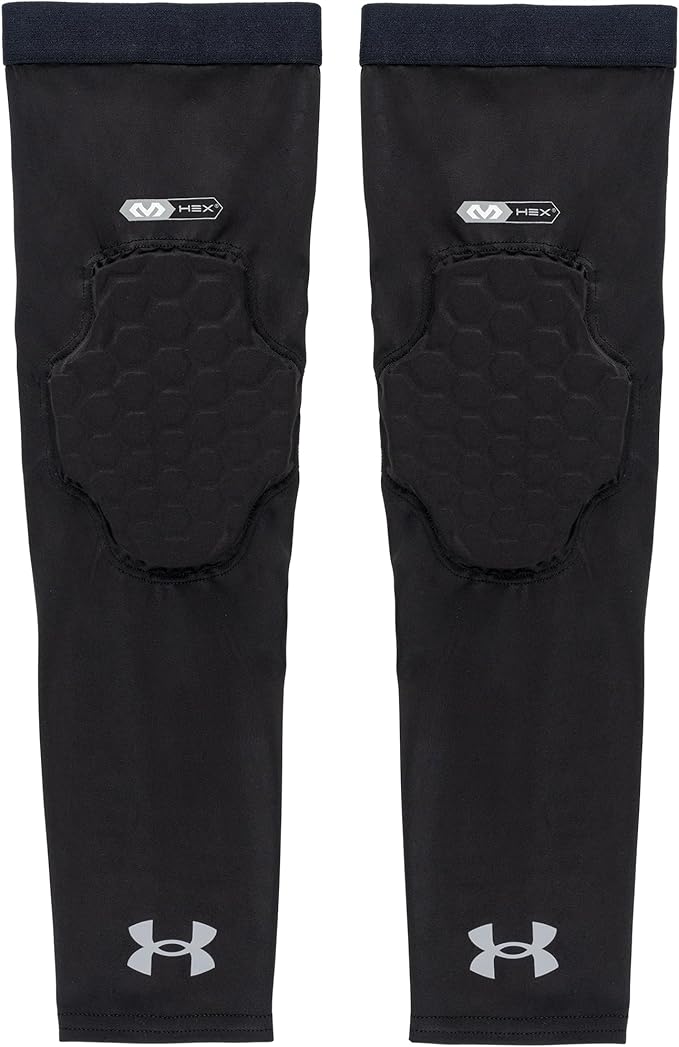
The Under Armour Volleyball Hex Padded Arm Sleeve is a good option for players who prioritize protection around the elbow. Its Hex padding adds cushioning in an area that commonly makes contact with the court during dives and defensive plays.
The sleeve also uses moisture-management material to handle sweat during demanding practices and matches. Compared with a basic compression sleeve, its biggest advantage is the additional padding without completely restricting arm movement.
Key Features
- Hex padding around the elbow
- Moisture-wicking construction
- Snug athletic fit
- Anti-odor technology
- Suitable for indoor and outdoor play
Best For
Choose this sleeve if you are specifically searching for padded arm sleeves for volleyball and want more elbow coverage than a standard compression sleeve provides.
It can work for both younger and adult players, but getting the correct size is important because the fit can feel quite snug.
Our Verdict: The Under Armour Hex is one of the better choices in this list when padding is your main priority. Players who dive frequently should find its elbow-focused design more useful than a thin volleyball sleeve with no impact protection.
- Padded elbow protection
- Secure fit during movement
- Handles sweat well
- Suitable for different styles of volleyball
- Good alternative to bulky elbow pads
- Fit may feel tight for some players
- Most of the padding is concentrated around the elbow
- Heavier than a basic non-padded compression sleeve
3. McDavid 6500 Hex Padded Arm Sleeve — Best for Elbow Protection

The McDavid 6500 Hex Padded Arm Sleeve is worth considering if elbow protection is more important to you than having a volleyball-specific sleeve. It uses 9mm Hex padding around the elbow combined with a compression-style fit.
Unlike some of the other options in this guide, the McDavid 6500 is a multi-sport sleeve rather than a product designed exclusively for volleyball. However, its padded construction can still make it useful for volleyball players who frequently dive, slide, or land on their elbows.
Its moisture-management fabric is designed to deal with sweat, while the sleeve is also machine washable for easier maintenance.
Key Features
- 9mm Hex padding
- Compression-style construction
- hDc moisture-management technology
- Machine washable
- Multi-sport design
Best For
The McDavid 6500 is best suited to volleyball players looking for substantial elbow padding. It may be particularly useful for defensive players who are less concerned about having an ultra-light sleeve and more concerned about cushioning around the elbow.
Our Verdict: Pick the McDavid 6500 if elbow protection is your first priority. For players wanting a lighter, more volleyball-specific feel, the Mizuno options may be a better match.
- Thick 9mm Hex padding
- Good elbow coverage
- Compression-style fit
- Moisture-management material
- Machine washable
- Sold as a single sleeve
- Not designed exclusively for volleyball
- Grip area may feel tight on larger arms
- More padding than some players need
4. Mizuno Arm Sleeves — Best Lightweight Volleyball Compression Sleeves

The Mizuno Arm Sleeves are a strong choice for volleyball players who want lightweight coverage without bulky padding. Their compression-style design provides a close fit while allowing your arms to move naturally during serving, setting, hitting, and defensive play.
Unlike padded volleyball sleeves, these are designed more around comfort, coverage, and a streamlined fit. The moisture-wicking fabric is particularly useful during long practices or matches, while the seamless construction helps keep the sleeves comfortable against the skin.
Key Features
- Lightweight compression design
- Seamless construction
- Moisture-wicking material
- Flexible fit for unrestricted movement
- Non-padded design
Best For
These volleyball compression sleeves are best for setters, hitters, and all-around players who want lightweight arm coverage without extra padding.
They are also a good alternative for players who find padded sleeves too bulky or warm.
Our Verdict: Choose the Mizuno Arm Sleeves if you want a simple, lightweight volleyball sleeve rather than heavy protection. For liberos or players who frequently land on their elbows, a padded option such as the Mizuno MZO may be more suitable.
- Lightweight and breathable
- Comfortable compression-style fit
- Suitable for different playing positions
- Allows good freedom of movement
- Less bulky than padded sleeves
- No padding for dives or floor contact
- Limited color selection
- Not the best option if impact protection is your main priority
5. Under Armour Performance Compression Arm Sleeve — Best for Outdoor Volleyball

The Under Armour Performance Compression Arm Sleeve is a versatile option for players who compete or practice outdoors. Its lightweight HeatGear fabric helps manage sweat, while the 4-way stretch construction allows the sleeve to move naturally with your arm.
One of its most useful features for outdoor players is UPF 30+ sun protection, which gives it an advantage over basic volleyball arm sleeves when you are playing in direct sunlight.
Because this is a thin compression sleeve rather than a padded one, it is better suited to players looking for lightweight coverage than those who need cushioning during frequent dives.
Key Features
- 4-way stretch construction
- HeatGear sweat-wicking fabric
- UPF 30+ sun protection
- Lightweight compression fit
- Suitable for indoor and outdoor use
Best For
This sleeve is best suited to outdoor and beach volleyball players who want lightweight coverage, flexibility, and added sun protection.
It can also work indoors for players who prefer a thin compression sleeve instead of padded protection.
Our Verdict: The Under Armour Performance Compression Arm Sleeve makes the most sense for outdoor volleyball, particularly when sun exposure and breathability matter more than padding. Defensive indoor players who spend a lot of time diving may be better served by one of the padded options higher on our list.
- UPF 30+ sun protection
- Lightweight construction
- Flexible 4-way stretch
- Sweat-wicking material
- Useful for beach and outdoor volleyball
- No impact padding
- Thin construction offers limited protection during dives
- Players wanting elbow cushioning should choose a padded sleeve instead
If you regularly play outside, see our guide to the best outdoor volleyball nets.
6. Nike Pro Dri-FIT 4.0 Arm Sleeves — Best for Sweat Management

The Nike Pro Dri-FIT 4.0 Arm Sleeves are designed for players who prefer a lightweight, close-fitting sleeve during practices and competitive matches. Their main advantage is Nike’s Dri-FIT material, which is designed to move moisture away from the skin as you play.
The smooth seams and lightweight construction help keep the sleeves comfortable through repeated arm movement. Because they do not include protective padding, they are better suited to players who prioritize breathability and moisture management over cushioning.
Key Features
- Nike Dri-FIT material
- Lightweight construction
- Smooth seams
- Close athletic fit
- Non-padded design
Best For
These arm sleeves are best for volleyball players who want lightweight coverage and sweat management during practices, tournaments, or long matches.
They can work well for players who do not need padded elbow protection and prefer a less bulky sleeve.
Our Verdict: The Nike Pro Dri-FIT 4.0 is a practical choice if you want a lightweight volleyball arm sleeve focused on comfort and sweat management. If your main reason for wearing sleeves is protection from floor contact, choose a padded model instead. and reliable. Players appreciate the snug fit and comfort. A preferred choice for both men and women in competitive volleyball.
- Lightweight feel
- Good moisture-management design
- Smooth seams for added comfort
- Suitable for practice and competition
- Less bulky than padded volleyball sleeves
- No padding
- Not designed for impact protection
- May not be the best choice for players who frequently dive onto their elbows
7. Cooling Arm Sleeves — Best for Hot Weather

Cooling Arm Sleeves are a practical option for volleyball players who want lightweight arm coverage during warm-weather practices, beach volleyball, or outdoor matches. Their thin construction focuses more on breathability and coverage than impact protection.
Unlike padded volleyball arm sleeves, cooling sleeves do not add bulky cushioning around the elbow or forearm. This makes them better suited to players who want a light layer on their arms while maintaining a full range of motion.
Key Features
- Lightweight cooling fabric
- Breathable construction
- UV protection
- Flexible fit
- Non-padded design
Best For
These sleeves are best for outdoor volleyball, beach volleyball, and warm-weather practices where lightweight coverage and breathability are more important than padding.
Our Verdict: Cooling arm sleeves make the most sense for players who want lightweight coverage in hot or sunny conditions. For indoor defensive players who need cushioning when diving, a padded volleyball sleeve is a better choice.
- Lightweight feel
- Suitable for warm conditions
- UV-focused coverage
- Does not restrict arm movement
- Useful for outdoor activities beyond volleyball
- No padding for dives or floor contact
- Less volleyball-specific than some other options
- Not ideal if elbow or forearm protection is your main concern
8. Nike Pro Youth Elite Sleeves 2.0 — Best Volleyball Arm Sleeves for Youth
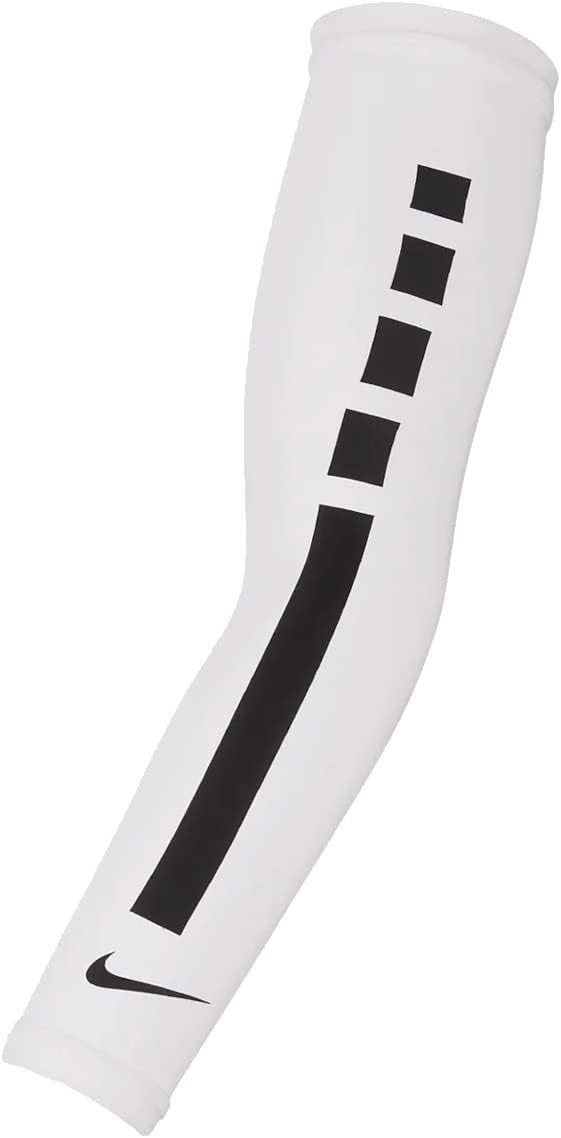
The Nike Pro Youth Elite Sleeves 2.0 are a strong option for younger volleyball players who need a sleeve designed around smaller arms. A youth-specific fit can be especially important in volleyball because an adult sleeve that is too loose may slide down during serving, passing, or defensive movement.
The lightweight construction provides arm coverage without the bulk of heavily padded sleeves, making these a practical option for young players who prioritize mobility and comfort.
They can also be worth considering for girls looking for volleyball arm sleeves in youth sizing, provided the player’s arm measurements match the available size.
Key Features
- Youth-specific sizing
- Lightweight construction
- Flexible athletic fit
- Designed for active movement
- Suitable for practices and matches
Best For
These sleeves are best for youth volleyball players and girls who need smaller sizing rather than a full-size adult compression sleeve.
When choosing volleyball sleeves for younger players, use the manufacturer’s sizing information rather than relying on age alone. A secure fit should stay in place without feeling excessively restrictive.
Our Verdict: The Nike Pro Youth Elite 2.0 is one of the better options on this list for younger players. It is particularly worth considering when standard adult volleyball arm sleeves are too large or tend to slide during play.
- Youth-focused sizing
- Lightweight and flexible
- Suitable for active volleyball movement
- Less bulky than heavily padded sleeves
- Recognizable athletic brand
- Limited protection compared with padded sleeves
- Correct sizing is important
- Not the best choice for players specifically seeking thick elbow padding
9. FitsT4 Youth Volleyball Arm Sleeves — Best for Young Beginners
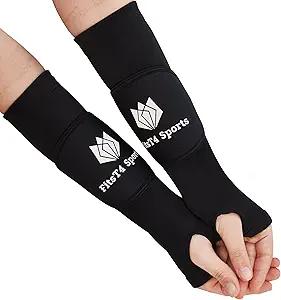
The FitsT4 Youth Volleyball Arm Sleeves are another option for kids and younger players who need a smaller, secure-fitting sleeve. Their youth-oriented design makes them easier to consider for players who struggle with adult sleeves slipping or bunching during movement.
An anti-slip design helps the sleeves stay in position during passing, serving, and general court movement. The lightweight construction also makes them approachable for beginners who are still getting used to wearing arm sleeves during volleyball.
Key Features
- Youth-oriented sizing
- Anti-slip design
- Lightweight construction
- Flexible fit
- Designed for active movement
Best For
These sleeves are best suited to kids, youth players, and beginners who want simple arm coverage with a secure fit.
They may also suit youth girls who need volleyball sleeves in smaller sizes, although measurements should always be checked against the manufacturer’s current sizing chart before ordering.
Our Verdict: The FitsT4 Youth sleeves are a practical choice for beginners and younger volleyball players who prioritize a secure, lightweight fit. Players who frequently dive and want more impact protection should consider a padded youth option instead.
- Designed with younger players in mind
- Anti-slip construction
- Lightweight feel
- Easy option for beginners
- Flexible enough for general volleyball movement
- Less protective than padded volleyball sleeves
- May not fit older teens or players with larger arms
- Sizing should be checked carefully before purchase
Best Volleyball Arm Sleeves for Girls and Youth Players
The best volleyball arm sleeves for girls and youth players should fit securely without sliding down or feeling overly restrictive. Because younger players often have smaller arms than adults, choosing the correct size can be just as important as choosing the sleeve itself.
Among the options in our list, the Nike Pro Youth Elite Sleeves 2.0 are our top choice for youth players who want a lightweight athletic sleeve. Their youth-oriented sizing makes them a better starting point for younger players who may find standard adult sleeves too large.
The FitsT4 Youth Volleyball Arm Sleeves are another option for kids and beginners, particularly for players who want a lightweight sleeve with an anti-slip design.
What Should Girls and Youth Players Look For?
When choosing volleyball arm sleeves for youth players, consider these factors:
- Correct sizing: The sleeve should stay in place during serving, passing, and diving without cutting into the arm.
- Comfort: Lightweight and flexible materials are generally easier for younger players to wear through practices and matches.
- Padding: Players who frequently dive may prefer padded sleeves, while those mainly looking for coverage may prefer lightweight compression sleeves.
- Secure fit: Look for a design that minimizes slipping or bunching during movement.
- Freedom of movement: A sleeve should not interfere with setting, serving, hitting, or passing.
For younger players, avoid choosing a sleeve based only on age. Check the manufacturer’s current sizing chart and measure the arm when necessary, since fit can vary between brands.
Our Pick: For most youth players, we prefer the Nike Pro Youth Elite Sleeves 2.0 for their youth-focused fit. The FitsT4 sleeves are another option worth considering for younger beginners.
Best Arm Sleeves for Liberos
Liberos and defensive specialists spend more time making low defensive plays and diving for difficult balls, so their priorities can be different from those of players who mainly want lightweight arm coverage.
For this type of play, we prefer the Mizuno MZO Padded Sleeves. Their padded elbow area provides additional coverage where floor contact commonly occurs, while the compression-style construction keeps the sleeve relatively close to the arm.
The Under Armour Volleyball Hex is another option for players who want more padding around the elbow.
Not every libero needs padded sleeves, however. Players who prefer maximum freedom of movement or simply want lightweight coverage may be more comfortable in a non-padded compression sleeve.
Ultimately, the best libero arm sleeves depend on how often you dive, where you tend to make contact with the floor, and whether you prefer additional cushioning or a lighter feel.
Padded vs. Compression Volleyball Arm Sleeves: Which Should You Choose?
One of the biggest decisions when choosing volleyball arm sleeves is whether you need padding or lightweight compression. Neither type is automatically better for every player—the right choice depends on why you want to wear sleeves in the first place.
Padded Volleyball Arm Sleeves
Padded arm sleeves include additional cushioning around areas such as the elbow or forearm. They are particularly useful for players who frequently dive or make contact with the court during defensive plays.
Padded sleeves may be better for:
- Liberos and defensive specialists
- Players who frequently dive
- Players who want additional elbow or forearm coverage
- Indoor volleyball where floor contact is a concern
The tradeoff is that additional padding can make a sleeve feel warmer or bulkier than a lightweight compression model.
In our list, the Mizuno MZO, Under Armour Volleyball Hex, and McDavid 6500 Hex are the main padded options.
Compression Volleyball Arm Sleeves
Compression-style volleyball sleeves generally have a thinner, closer-fitting construction without substantial impact padding. They are better suited to players who prioritize lightweight coverage, flexibility, and moisture management.
Compression sleeves may be better for:
- Setters and hitters who want unrestricted movement
- Players who dislike bulky padding
- Practices and long matches
- Outdoor players looking for lightweight coverage
- Players who mainly want a close athletic fit
The Mizuno Arm Sleeves, Under Armour Performance Compression Sleeve, and Nike Pro Dri-FIT 4.0 are examples of lighter, non-padded options in this guide.
Padded vs. Compression: Quick Comparison
| Feature | Padded Sleeves | Compression Sleeves |
|---|---|---|
| Impact cushioning | Better | Minimal |
| Weight | Usually heavier | Usually lighter |
| Flexibility | Varies by padding | Generally high |
| Floor-contact coverage | Better | Limited |
| Best suited to | Diving/defensive play | Lightweight general use |
| Common choice for | Liberos, defensive players | Setters, hitters, general players |
Which Is Better for Volleyball?
Choose padded arm sleeves for volleyball if protection during dives and floor contact is your main priority.
Choose a lightweight compression sleeve if you mainly want arm coverage, a close fit, and minimal bulk.
Players who are unsure should think about their position and playing style first. A libero who dives repeatedly may value padding much more than a hitter who simply wants a lightweight sleeve during practice.
How to Choose the Best Volleyball Arm Sleeves
The best volleyball arm sleeves for you depend on your position, playing style, preferred level of protection, and fit. A libero who frequently dives may have different needs from a setter or hitter who mainly wants lightweight arm coverage.
Before choosing a sleeve, consider the following factors.
1. Get the Right Fit and Size
Fit is one of the most important things to consider when choosing arm sleeves for volleyball. A sleeve that is too loose may slide down during play, while one that is excessively tight can feel uncomfortable or restrict movement.
Look for a snug, secure fit that stays in position while you serve, pass, set, hit, and dive.
Always check the manufacturer’s current sizing chart before buying. If measurements are provided, measure your arm rather than choosing a size based only on your usual clothing size.
This is particularly important when buying youth volleyball arm sleeves, since adult sizes may be too loose for younger players.
2. Decide Whether You Need Padding
Not every volleyball player needs a padded sleeve.
If you frequently dive or make contact with the court, a padded arm sleeve can provide additional cushioning around the elbow or forearm. This can make padded options particularly appealing to liberos and defensive specialists.
If floor contact is not a major concern, a lightweight non-padded sleeve may feel less bulky and allow greater freedom of movement.
Think about why you want the sleeve before deciding how much padding you need.
3. Consider Compression and Flexibility
Many volleyball compression sleeves use stretchy materials to create a close athletic fit.
Regardless of the level of compression, the sleeve should allow you to move your elbow and shoulder naturally. You should be able to perform normal volleyball movements without constantly adjusting the sleeve.
Players who prioritize mobility may prefer a thin compression-style sleeve over a heavily padded design.
4. Choose Breathable, Moisture-Managing Materials
Volleyball can involve long practices, multiple tournament matches, and plenty of sweating. Breathable materials can therefore make a noticeable difference in comfort.
Look for lightweight fabrics designed to manage moisture and dry relatively quickly.
This is especially useful for players who wear their sleeves for extended periods or compete in warm gyms and outdoor conditions.
5. Choose According to Your Volleyball Position
Your position can help determine which type of sleeve makes the most sense.
Liberos and defensive specialists: Padded sleeves may be useful because these players frequently dive and make contact with the floor.
Outside and opposite hitters: Lightweight sleeves can provide coverage without adding unnecessary bulk during hitting and blocking movements.
Setters: Flexible, non-restrictive sleeves are generally more important than heavy padding because setters rely on frequent and precise arm movement.
Middle blockers: A lightweight sleeve may be sufficient for players who do not spend as much time diving, although individual playing style still matters.
A player’s position should be treated as a starting point rather than a strict rule. Choose according to how you actually play.
6. Check Where the Padding Is Located
If you choose padded volleyball arm sleeves, do not look only at the amount of padding. Check its location as well.
Some sleeves concentrate cushioning around the elbow, while others may extend farther along the forearm.
Think about where your arm normally contacts the floor when you dive. Padding is most useful when it covers the areas where you actually need it.
More padding is not automatically better, since excessive bulk can affect comfort and flexibility.
7. Look for a Sleeve That Stays in Place
Constantly pulling a sleeve back up during a match can be distracting.
Look for a secure upper opening, appropriate compression, or an anti-slip design. Correct sizing remains important—even a well-designed sleeve may slide if it is too large for your arm.
For kids and younger players, this is another reason to consider youth-specific sizing rather than simply buying the smallest adult size.
8. Consider Durability
Volleyball sleeves can experience repeated stretching, sweat, washing, and contact with the court.
Check the construction around
Players updating the rest of their gear can also check our best volleyball shoes guide.
Frequently Asked Questions About Volleyball Arm Sleeves
What Are the Best Arm Sleeves for Volleyball?
The best arm sleeves for volleyball depend on what you need from them. We chose the Mizuno MZO Padded Sleeves as our best overall option because they combine a volleyball-focused design with elbow padding and a close fit.
Players who prioritize padding can also consider the Under Armour Volleyball Hex or McDavid 6500 Hex, while those who prefer lightweight compression may be better suited to the Mizuno Arm Sleeves or Nike Pro Dri-FIT 4.0.
What Are Volleyball Arm Sleeves For?
Volleyball players wear arm sleeves for several reasons, including arm coverage, comfort, moisture management, and—in padded models—additional cushioning around the elbow or forearm during floor contact.
Different sleeves serve different purposes, so players should choose between padded and non-padded designs according to their position and playing style.
Are Arm Sleeves Good for Volleyball?
Arm sleeves can be useful for volleyball if they match the player’s needs. Padded sleeves can provide additional cushioning during dives, while lightweight compression-style sleeves provide coverage without the bulk of elbow padding.
They are optional equipment, however, and not every volleyball player needs to wear them.
Do You Need Arm Sleeves for Volleyball?
No. You do not need arm sleeves to play volleyball.
Some players prefer them for coverage, comfort, moisture management, or padding during defensive play, while others play comfortably without sleeves. Whether they are worthwhile depends on your position, playing style, and personal preference.
Are Padded or Compression Sleeves Better for Volleyball?
Padded sleeves are generally the better choice when cushioning during dives and floor contact is the main priority. Lightweight compression sleeves may be more suitable when you want a close fit, flexibility, and minimal bulk.
Liberos and defensive specialists may prefer padding, while setters, hitters, and other players may prefer lighter sleeves. There is no single type that is best for every position.
Should Volleyball Arm Sleeves Be Tight?
Volleyball arm sleeves should generally fit snugly enough to stay in place without feeling painfully tight or restricting normal arm movement.
If a sleeve repeatedly slides down, it may be too large. If it causes significant discomfort or limits movement, it may be too small. Always follow the manufacturer’s sizing recommendations.
Can Girls Wear Volleyball Arm Sleeves?
Yes. Girls can wear volleyball arm sleeves as long as the sleeve fits correctly and suits their playing needs.
For younger players or players with smaller arms, youth sizing may provide a more secure fit than standard adult sizes. The Nike Pro Youth Elite 2.0 and FitsT4 Youth sleeves are two youth-oriented options included in this guide.
Are Arm Sleeves Good for Liberos?
Arm sleeves can be particularly useful for liberos who frequently dive or make contact with the court. Padded sleeves provide additional cushioning around protected areas, while lightweight sleeves offer coverage with less bulk.
For liberos who prioritize padding, the Mizuno MZO is our top choice from the products in this guide.
How Do You Wash Volleyball Arm Sleeves?
Follow the care instructions provided by the sleeve manufacturer, since materials and padding can differ between products.
In general, proper washing and drying can help preserve the sleeve’s fit, elasticity, and padding. Avoid assuming that every sleeve can be washed or dried using the same settings.
Final Verdict: Which Volleyball Arm Sleeves Are Best?
The best volleyball arm sleeves depend on whether you prioritize padding, lightweight compression, outdoor coverage, or youth sizing.
For most players, our best overall pick is the Mizuno MZO Padded Sleeve because it combines a volleyball-focused design with elbow padding and a close athletic fit. It is particularly well suited to liberos and defensive players who frequently dive or make contact with the court.
If padding is your main priority, the Under Armour Volleyball Hex is another strong option, while the McDavid 6500 Hex offers substantial elbow cushioning for players who want additional protection.
Players who prefer a lighter, non-padded option should consider the Mizuno Arm Sleeves or Nike Pro Dri-FIT 4.0. For outdoor volleyball, the Under Armour Performance Compression Arm Sleeve stands out because of its lightweight construction and stated UPF protection.
For younger players, the Nike Pro Youth Elite Sleeves 2.0 are our preferred youth option, with the FitsT4 Youth sleeves providing another choice for kids and beginners.
Ultimately, choose your volleyball sleeves based on fit, playing position, and how much padding you actually need. A secure sleeve that suits the way you play is more useful than simply choosing the thickest or most expensive option.